Crop Wild Relatives in Aragon, Spain, 2024–2025
Introduction
In August 2024 and July 2025, two five-day collecting expeditions for crop wild relatives (CWR) were conducted in the autonomous community of Aragon, northeastern Spain. The expeditions were funded by CGN and carried out together with BGHZ-CITA. The missions were part of a broader collaboration between the two institutes, aimed at the joint collection and ex situ conservation of wild relatives of vegetable crops.
Approval for the collecting activities, including the exchange of collected materials under the SMTA of the ITPGRFA, was obtained from the Dirección General de Medio Natural, Caza y Pesca of the Government of Aragon prior to each mission.
Collecting activities
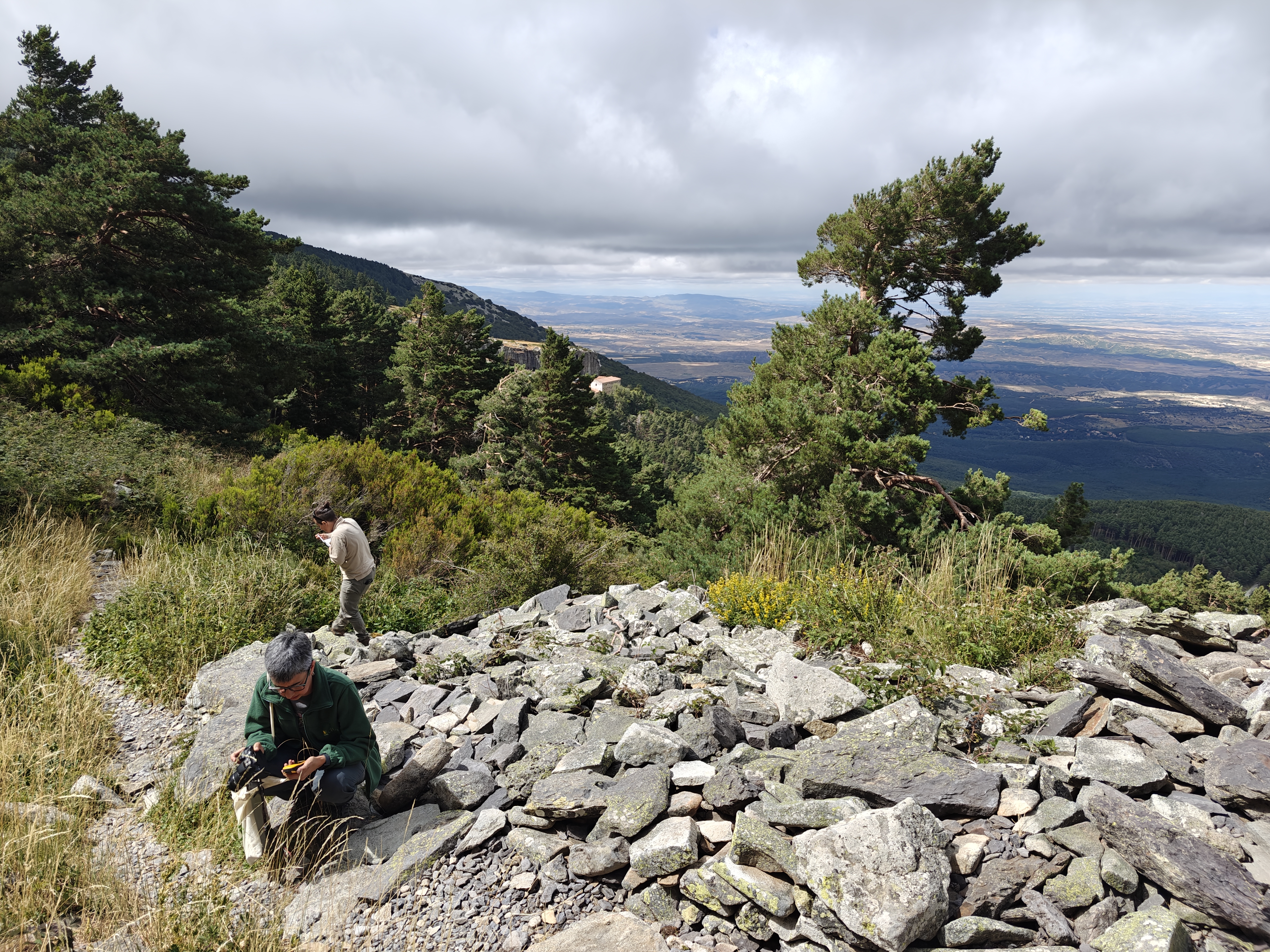
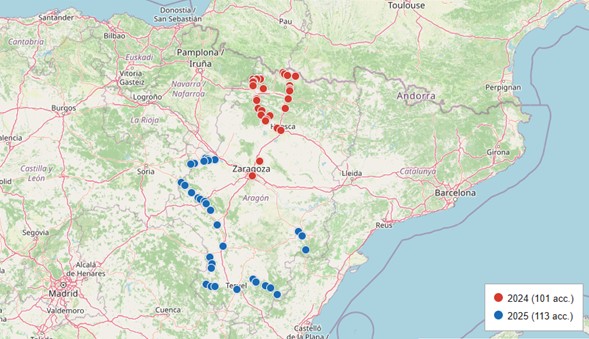
The collecting team consisted of three members. The two missions covered complementary parts of Aragon. The 2024 mission (26–30 August) focused on the western Pyrenean valleys and foothills of Huesca province – including the Hecho, Ansó and Fago valleys, the pre-Pyrenean zone (Loarre, Murillo de Gallego, Ayerbe), the Tena valley (Sabiñigo, Biescas, Formigal, up to 1,776 m at Puerto de El Portalet and the Balneario de Panticosa) – and a stop along the Ebro river near Zaragoza.
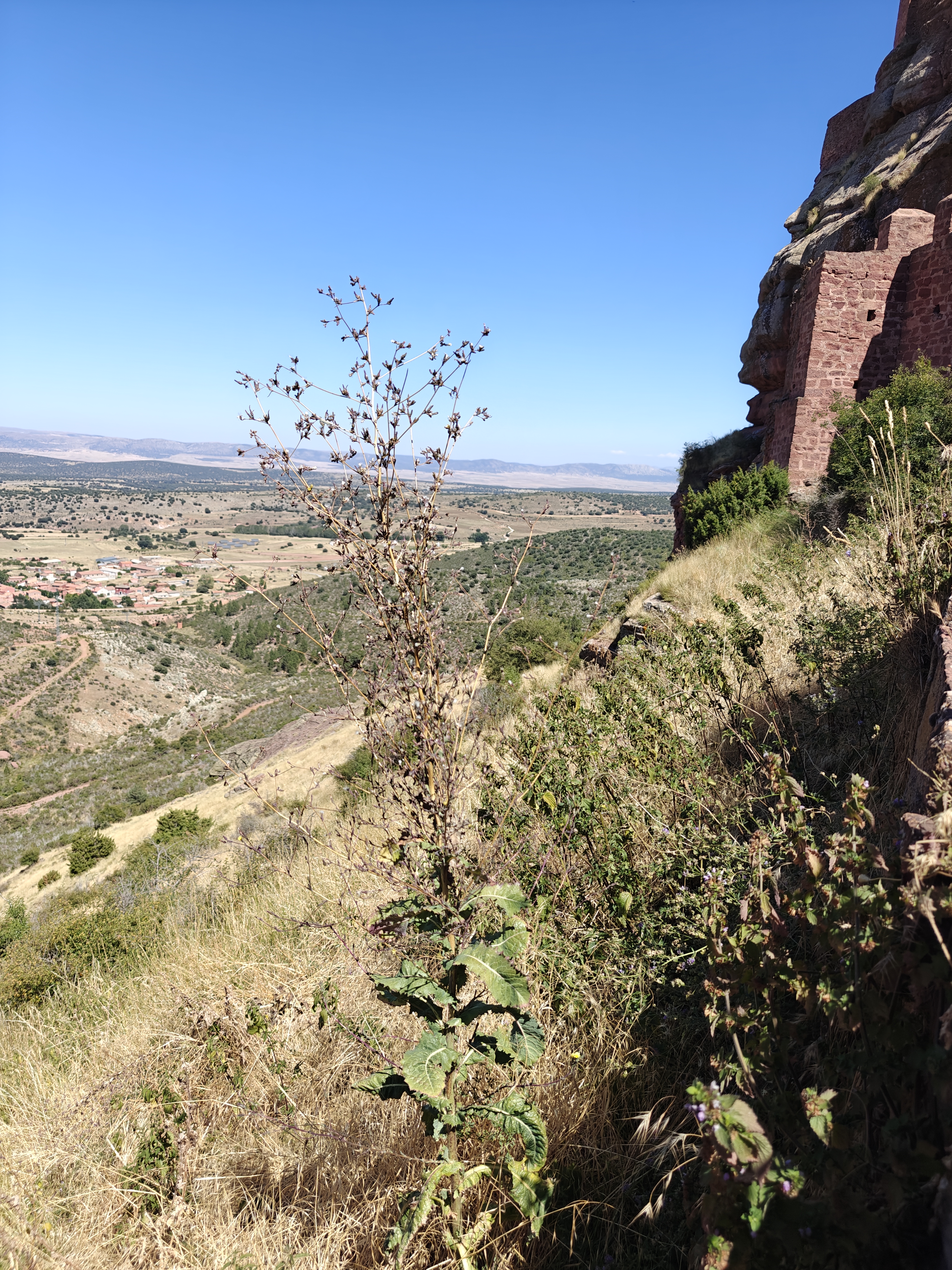
The 2025 mission (28–31 July) covered a different transect through central and southern Aragon, running from the Ebro lowlands near Borja southwest to Calatayud and Daroca, south through the Sierra de Albarracín and Teruel, into the Gúdar mountains (up to 1,759 m near Valdelinares), and returning north along the eastern foothills toward the Ebro valley. Habitats sampled across both missions included roadsides, field and orchard margins, abandoned fields, rocky slopes, castle walls, riverside paths and mountain meadows. Passport data and GPS coordinates were recorded for each accession, and photographs were taken of the plants in their natural environment.
Material sampled
We collected 214 accessions of at least 30 species from 12 genera. Some accessions, especially within Allium and Lactuca, require further taxonomic confirmation. A notable find in 2024 was Allium pyrenaicum, a species classified as vulnerable in the Catálogo de Especies Amenazadas en Aragón (Decreto 129/2022); biodiversity data for the two populations were recorded and reported to the competent authority.
The 2025 mission yielded 12 accessions of Lactuca virosa, a species considerably underrepresented in genebank collections relative to its close relative L. serriola, as well as Lactuca perennis and the putatively endemic Allium pardoi.
| Botanical name | 2024 | 2025 | Total |
|---|---|---|---|
| Amaryllidaceae | |||
| Allium ampeloprasum | 1 | 8 | 9 |
| Allium pardoi? | – | 1 | 1 |
| Allium pyrenaicum | 2 | – | 2 |
| Allium schoenoprasum | 1 | – | 1 |
| Allium sp. | 5 | 4 | 9 |
| Allium sphaerocephalon | 4 | 4 | 8 |
| Allium vineale | – | 1 | 1 |
| Amaranthaceae | |||
| Beta vulgaris | – | 1 | 1 |
| Blitum bonus-henricus | 4 | 1 | 5 |
| Apiaceae | |||
| Daucus carota | 18 | 15 | 33 |
| Foeniculum vulgare | 2 | – | 2 |
| Pastinaca sativa | 6 | 1 | 7 |
| Petroselinum crispum | 1 | 1 | 2 |
| Smyrnium olusatrum | 1 | – | 1 |
| Asparagaceae | |||
| Asparagus officinalis | 1 | – | 1 |
| Asteraceae | |||
| Cichorium intybus | 15 | 9 | 24 |
| Cichorium pumilum | – | 1 | 1 |
| Lactuca perennis | – | 1 | 1 |
| Lactuca saligna | 4 | 5 | 9 |
| Lactuca serriola | 29 | 31 | 60 |
| Lactuca viminea | 2 | 3 | 5 |
| Lactuca virosa | – | 12 | 12 |
| Brassicaceae | |||
| Brassica rapa | – | 1 | 1 |
| Diplotaxis erucoides | 1 | 5 | 6 |
| Eruca vesicaria | – | 7 | 7 |
| Sinapis sp. | 1 | 1 | 2 |
| Fabaceae | |||
| Lathyrus sylvestris? | 1 | – | 1 |
| Phaseolus vulgaris | 1 | – | 1 |
| Trifolium pratense? | 1 | – | 1 |
| Total | 101 | 113 | 214 |
Conclusion
The expeditions to Aragon successfully collected 214 accessions of crop wild relatives, filling gaps in the Spanish and international genebank collections. Notable additions include the vulnerable Pyrenean endemic Allium pyrenaicum and 12 accessions of Lactuca virosa, a species considerably underrepresented relative to its close relative L. serriola.
In accordance with the agreement between CGN and BGHZ-CITA, CGN is responsible for the multiplication of accessions where seed quantities were insufficient for immediate distribution between the two genebanks. If multiplication is successful, the accessions will be made available to potential users.